

What are nutrients?
The key principle behind nutrient management is balancing soil nutrient inputs with crop requirementsPlant nutrients are elements that are essential for plant growth and reproduction that are available in the soil (e.g. nitrogen, phosphorus, and potassium), or from air or water (carbon, hydrogen, oxygen). When existing soil nutrients cannot produce good crop yields, additional nutrients must be added. Nutrients are added to the soil from commercial fertilizers or from organic sources such as manure, compost or biosolids.
WOW! I Am Interested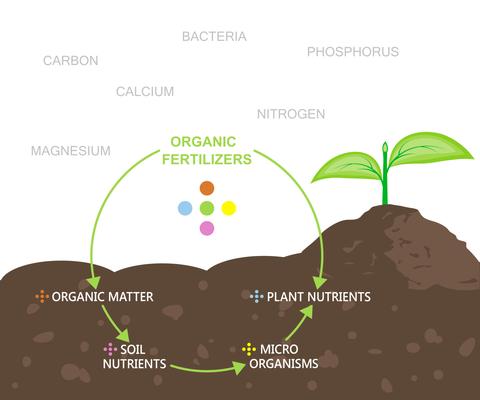
SOIL NUTRIENT MANAGEMENT TIPS
The use of bio based fertilizers & seed treatment together with soil nutrient management is vital to any sustainable agriculture strategy.Plant nutrition is only one of more than fifty factors which directly affect both crop yield and quality. The availability of required nutrients, together with the degree of interaction between these nutrients and the soil, play a vital role in crop development. A deficiency in any one required nutrient, or a soil condition that limits or prevents a metabolic function from occurring can limit plant growth.
WOW! I Am InterestedA soil nutrient management plan
Soil Deficiencies
There is a significant difference between an induced deficiency and a real soil deficiency.
Real Soil Deficiency
For example, certain crops require the addition of molybdenum at a specific rate for optimum growth. This is a real deficiency.
Induced Deficiency
In other crops zinc or iron deficiencies, caused by high levels of phosphorus and active calcium, can result in reduced yield. This is an induced deficiency.
Diagnosis
Typically, when deficiencies occur, the tendency is to foliar or soil apply copious amounts of product and hope for a favorable result. This ad hoc approach seldom achieves the expected result and is not very cost effective.
Corrective Action
Soil organic matter is vital in rebuilding depleted soil as it ensures a continuous energy source for soil biomass, which consists of microbes, fungi, algae, protozoa, and so forth.
Soil Nutrient Management
Soil nutrient management involves not only the physical properties and mineral structure of the soil, but also the balance between soil pathogens and beneficial microbes.